Admissions Open · Second intake begins 7 November 2026Explore the new batch
For UPSC CSE Mains 2027

For aspirants who wish to think, not merely prepare.

AKriti IAS brings answer writing, serious evaluation, analytical current affairs and sustained mentorship into one disciplined preparation ecosystem.

440selected questions across two syllabus cycles
75maximum aspirants in the batch
17,000+members in our Telegram community
Admissions Open · Second Intake

Mains Answer Writing & Mentorship Programme

Beginning 7 November 2026: 440 selected questions, two complete GS cycles, continuous evaluation, recorded masterclasses and fortnightly individual mentorship.

UPSC CSE Mains 2027Maximum 75 aspirantsEarly bird through 31 OctoberFive evaluated essays included
Open registration · No fee

Register for free mentorship.

Tell us where you stand in your UPSC journey and what is holding your preparation back. We will review your response and contact you for a focused mentorship conversation.

  • Clarify your immediate preparation priorities
  • Identify gaps in strategy or answer writing
  • Receive guidance suited to your present stage

Please submit the form once. Your details will be used only to respond to this mentorship request.

Submitting will open a prepared email. Press Send to complete your registration.

The AKriti approach

Preparation must produce the ability to write.

Knowledge matters only when an aspirant can organise it, apply it to the exact demand of a question and communicate it within the constraints of the examination.

01

Daily intellectual discipline

Regular questions across GS I-IV help build recall, structure, speed and analytical endurance over time.

02

Evaluation that teaches

Feedback identifies what weakened an answer and shows the aspirant how to make the next attempt more precise and effective.

03

Current affairs with purpose

NewsDigest and high-value information sheets convert contemporary developments into arguments, examples and Mains-ready dimensions.

A method, not a slogan

The improvement cycle

The programme treats answer writing as a skill developed through repeated, deliberate practice—not as a performance reserved for the months after Prelims.

THINK
WRITE
EVALUATE
UNDERSTAND
IMPROVE
REPEAT
One integrated ecosystem

More than a daily question.

The programme combines structured practice with the academic and strategic support needed to sustain a year-long Mains journey.

Answer-writing architecture

  • Daily GS I, II, III and IV practice
  • Progressively richer questions across later iterations
  • Half-length tests through 10-answer submissions
  • Full-length tests through 20-answer submissions
  • Evaluation, revision and masterclasses

Enrichment and mentorship

  • Daily NewsDigest with seven Mains-relevant issues
  • High-value information sheets for priority topics
  • Essay guidance and evaluated essays
  • Interview guidance through Zoom
  • Sustained mentor access and preparation planning
Daily NewsDigest

Seven developments. Exam-ready analysis.

Each edition selects high-value developments from the day’s news, maps them to the syllabus, reduces them to concise analytical dimensions and ends with a clear Mains Connect.

GS mapping5-6 dimensionsMains ConnectMobile readable

Information Sheets

Focused explainers on concepts, institutions and developments that deserve deeper treatment than daily current affairs allow.

Insights & Articles

A growing public knowledge hub for analytical writing—built to help aspirants understand before they attempt to reproduce.

Visit the knowledge hub →
Model Questions & Answers · Open library

Study how an answer is built—not merely what it contains.

Explore question-led, examination-ready answers across GS I, GS II and GS IV. Each resource demonstrates demand recognition, argument, structure, examples and a purposeful conclusion.

Daily Learning · Open to all

Ideas to think with, every day.

A public space for full NewsDigest editions, visual explainers and analytical notes on issues that deserve a closer look.
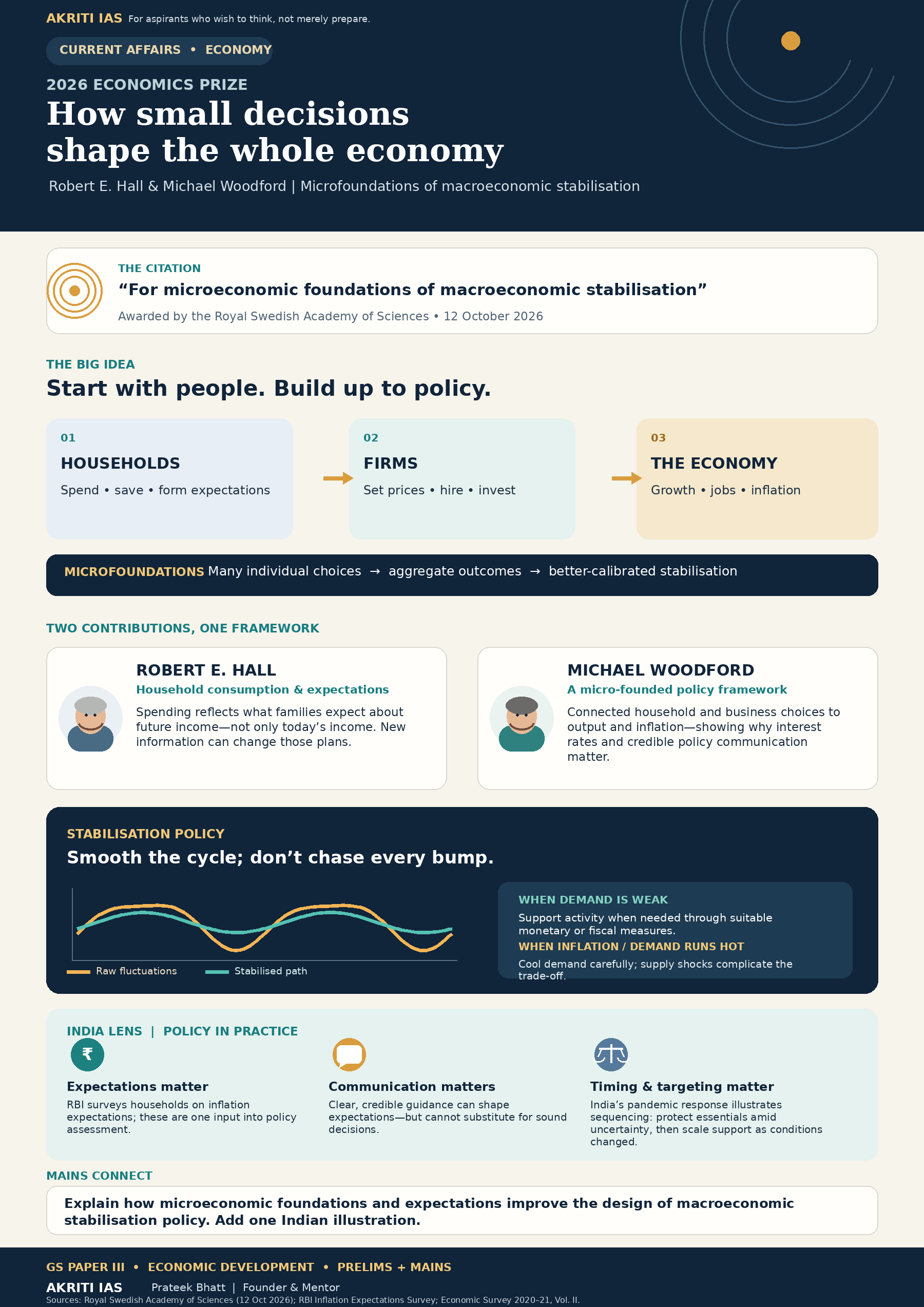
New in Daily Learning: 2026 Economics Nobel—how small decisions shape the whole economy →New in Daily Learning: Nirbhau and Nirvair—courage without hatred →New in Daily Learning: Delhi protests—rights, public order and sovereignty →New in Daily Learning: When a river is blocked—then breaks free →New in Daily Learning: Prelims 2027 MCQ Practice Plan →New in Daily Learning: Instability in India’s neighbourhood · GS II & GS III →New in Daily Learning: Michel Foucault on power and knowledge →New in Daily Learning: When chemistry chooses a side · 2026 Chemistry Nobel →New in Daily Learning: The China-U.S. rapprochement · GS II International Relations →New in Daily Learning: Great Nicobar, tribal rights and development →New in Daily Learning: Francis Halzen, IceCube and neutrino astronomy →New in Daily Learning: Jaishankar at the Munich Leaders’ MeetingNew in Daily Learning: Captain Smit Machchhar and India–Israel relationsNew in Daily Learning: Battle of Asal Uttar — an illustrated historyNew in Daily Learning: Suspension of Operations in ManipurNew in Daily Learning: Karnataka’s plan for greener data centres →New in Daily Learning: India’s ageing population and the fertility shift →New in Daily Learning: IN-SPACe’s hosted-payload rules →New in Daily Learning: India–EFTA and the trade multiplier →New in Daily Learning: Unopposed Maharashtra polls and democratic choice →Featured NewsDigest · GS II & GS III · 29 September 2026NewsDigest: Seven developments. One exam-oriented reading.New in Daily Learning: Trump’s AI accord and safety oversight →New in Daily Learning: Jammu & Kashmir and Statehood →Read the 9-page NewsDigest →New in Daily Learning: BRICS 2026 and Indian foreign policy →Also in Daily Learning: SAMARTH and Army readiness →Explore Antonio Gramsci’s cultural hegemony infographic →
AKriti IAS infographic explaining the 2026 Economics Prize awarded to Robert E. Hall and Michael Woodford
The objective is to develop judgment, structure and an individual voice capable of meeting the demands of the examination.
Interview Guidance in practice

Watch the guidance—not merely the claim.

Our authorised recordings show DAF analysis, situation-based questioning and the individual attention candidates receive from experienced panelists.

Deepanshu Jindal · AIR 38Aakriti Singla · AIR 122Ajay Gupta · AIR 452
Explore videos and candidate feedback

Aakriti Singla with Aradhana Johri, IAS (Retd.) and Prateek Bhatt.

Begin a year of deliberate Mains preparation.